


2026 Experiential Marketing Buzzwords Brands Should Be Watching


As we move into 2026, experiential marketing continues to evolve beyond “wow moments” and into something more intentional, strategic, and measurable. Brands are no longer asking if events work—they’re asking how to make them work smarter, longer, and with greater impact.
After careful research and trend analysis, we’ve identified a few key experiential marketing buzzwords that brands should have firmly on their radar this year. Each of these concepts will influence how experiences are planned, executed, and evaluated throughout 2026.
Let’s break your 2026 experiential marketing buzzwords:
Sustainability (And Why It’s Here to Stay)
Sustainability is no longer a “nice-to-have” talking point—it’s becoming the standard.
While you likely heard this term frequently throughout 2025, it’s not going anywhere in 2026. Today’s audiences and brand leaders are increasingly conscious of:
Environmental responsibility
Reducing unnecessary waste
Being intentional with event dollars
In experiential marketing, sustainability shows up in practical ways:
Thoughtful sourcing of materials
Reusable or modular event elements
Reduced single-use décor and signage
🌟Most Notable: Designing programs that can be repeated or refreshed, rather than rebuilt from scratch
Brands are also rethinking frequency and longevity. If an event concept or activation resonates, many are choosing to reuse and evolve that experience across multiple touchpoints or markets instead of starting over each time. The result? Better ROI, stronger brand consistency, and less waste—financially and environmentally.
Immersive Experiences (Without Overcomplicating It)
Immersive experiences remain a top priority in 2026, but the definition has matured.
Today’s audiences are seeking experiences that:
Engage the senses
Invite participation
Feel personal, not performative
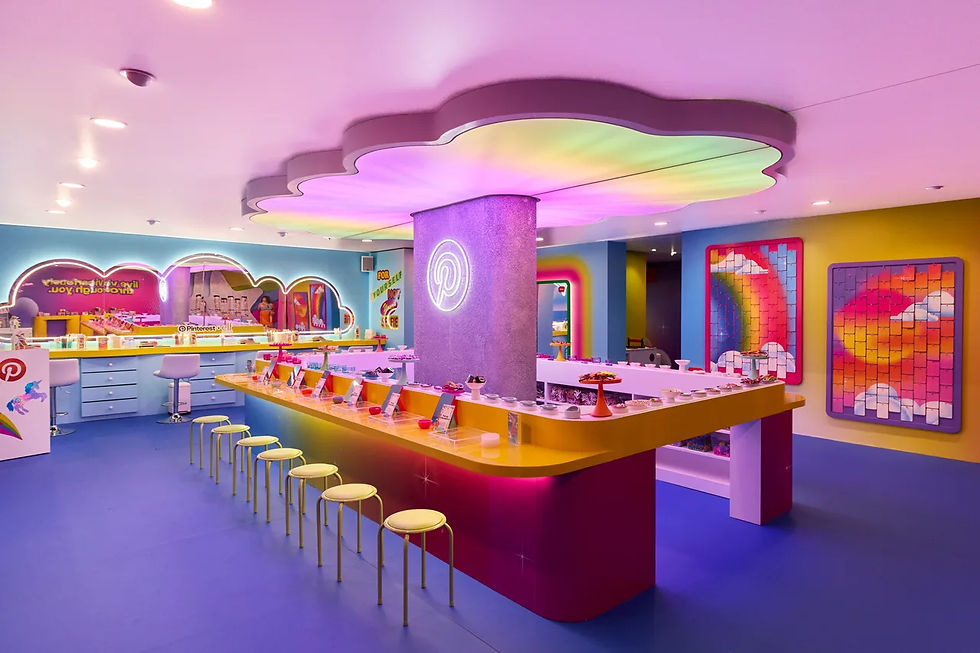
At its core, immersion is about connection—connecting your brand to your audience both practically and emotionally. And contrary to popular belief, immersive does not have to mean expensive or tech-heavy.
Some of the most effective immersive elements are surprisingly simple, including:
Scent bars or tasting stations
Live art walls (murals, sticky-note installations, or collaborative canvases)
Motion-triggered projections
Themed photo booths (we'll touch more on this down below)
Gamified experiences like scavenger hunts or interactive challenges
Event app features such as live polls, Q&A, or real-time feedback
These elements work because they invite tangible participation and shared creation, making attendees feel like active contributors rather than passive guests. The result is a more memorable, human-centered experience that audiences actually remember—and talk about—after the event.
AI Integration (A Supporting Role, Not the Star)
AI continues to make headlines, and in 2026, it’s finding its place in experiential marketing—but as a supporting tool, not the main attraction.
When used thoughtfully, AI enhances efficiency and guest experience without overshadowing the human element. We’re seeing AI show up in areas such as:
Personalized event agendas and recommendations
Smart networking matches
AI chatbots for instant guest support
Real-time translation tools
Predictive analytics for logistics like crowd flow and staffing
Automated content and post-event marketing creation
On the backend, experiential marketing (XM) specialists are also leveraging AI-powered analytics to better understand audience behavior—sometimes through sentiment analysis, engagement tracking, or even facial and body-language impressions to assess crowd response. The key takeaway? AI should support better decision-making and engagement, not replace human connection. Brands that strike this balance will stand out in 2026.
Looking Ahead: What This Means for Your Brand
These buzzwords—Sustainability, Immersive Experience, and AI Integration—aren’t trends to chase blindly. They’re signals pointing toward more intentional, thoughtful, and results-driven experiential strategies.
The brands that succeed in 2026 will be the ones that:
Plan with purpose
Design experiences that respect both audience and resources
Use technology to enhance—not distract from—connection
If you’re thinking about how these trends could show up in your next event, activation, or experiential campaign, we’d love to explore that with you.
Schedule an Alignment Call with Go Savvy to talk through your goals, ideas, and opportunities for 2026. Together, we’ll help you design experiences that connect, engage, and truly work.


Comments